Chimpanzee Trekking in Nyungwe National Park: Why Rwanda’s Ancient Rainforest Should Be on Your 2026–2027 Africa Safari List
August 26, 2026Clementine

If you are searching for an African wildlife experience that goes beyond the traditional savannah safari, chimpanzee trekking in Nyungwe National Park deserves a place near the top of your 2026–2027 travel list.
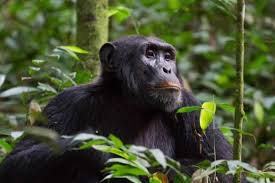
There is a powerful reason for this.
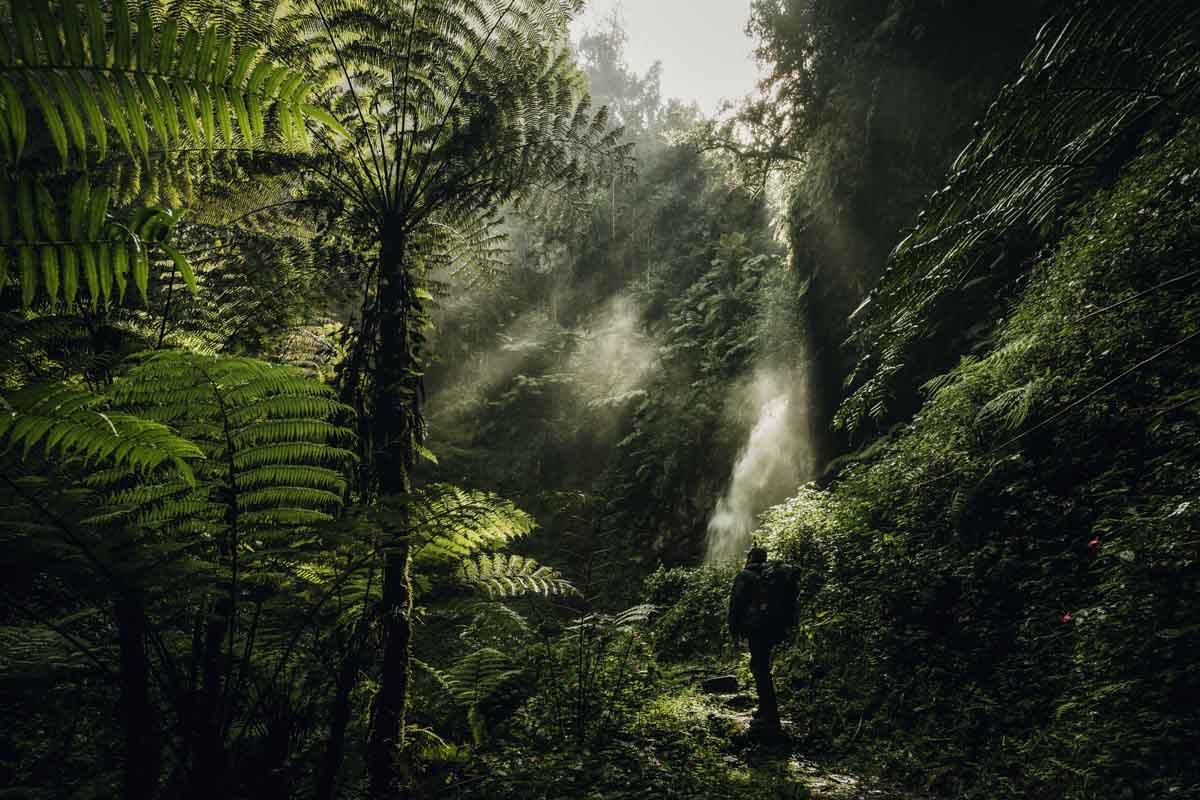
Nyungwe is not simply a destination where visitors come to see chimpanzees. It is an ancient Afromontane rainforest where wildlife, mountains, waterfalls, wetlands, birds, primates, indigenous trees and local communities form one interconnected ecosystem.
The experience is also fundamentally different from watching lions, elephants and giraffes from a safari vehicle on the open plains. In Nyungwe, the forest itself becomes part of the adventure. You walk beneath towering trees, listen for calls moving through the canopy, follow signs left by chimpanzees and enter a landscape where visibility can change from one moment to the next.
Today, Nyungwe National Park covers approximately 1,019 km² and is Rwanda's largest protected forest. It contains exceptional biodiversity, including chimpanzees and 13 primate species, while its conservation importance was internationally recognised when UNESCO inscribed Nyungwe National Park as Rwanda's first natural World Heritage Site in 2023.
Why Nyungwe National Park Is One of Africa's Most Extraordinary Forest Safari Destinations
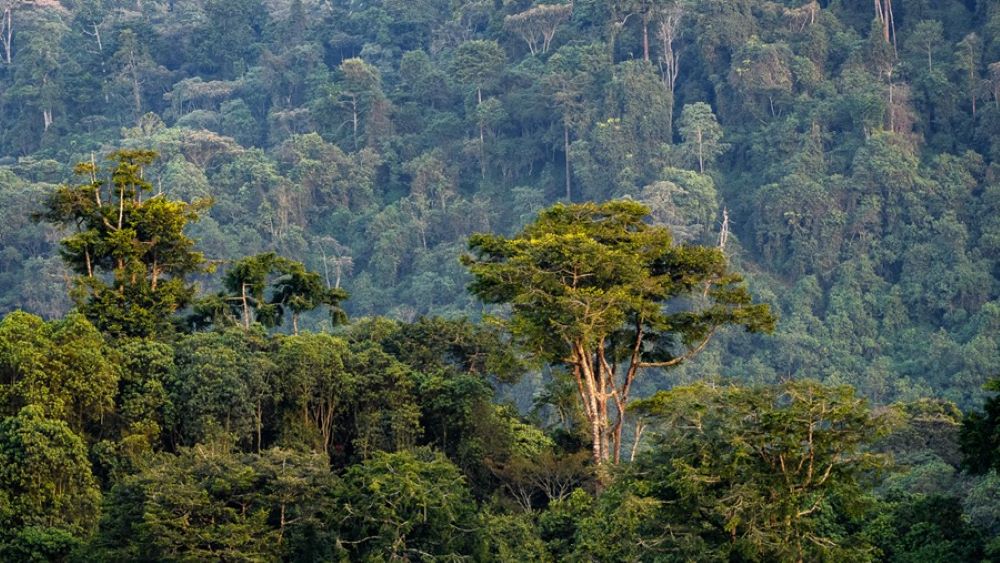
To understand why chimpanzee trekking in Rwanda is so special, it is important to understand the forest itself.
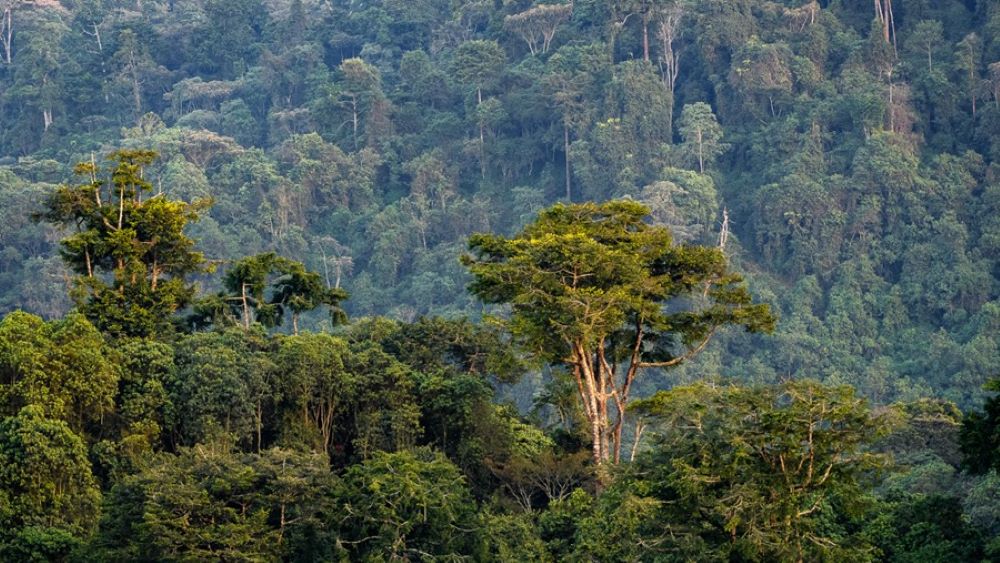
Nyungwe is one of Africa's oldest rainforests and one of the most important biodiversity landscapes in the Albertine Rift. African Parks currently describes the park as a 1,019-km² landscape of Afromontane forest, bamboo-covered slopes, grasslands and wetlands. It records more than 1,100 plant species, 345 bird species and 85 known mammal species, including 13 primate species.
The forest also plays a role far beyond tourism.
Nyungwe is an important water catchment for Rwanda and feeds systems associated with both the Congo and Nile basins. The Rwanda Development Board has described the forest as a critical ecological resource providing a major proportion of Rwanda's water.
So when travellers visit Nyungwe, they are not simply entering another safari park. They are entering one of Central and East Africa's most important forest ecosystems.
The History of Nyungwe: From Protected Forest to National Park and World Heritage Site

Absolutely. If you are going to use the history in your Nyungwe blog, I recommend presenting it as a story of protection, pressure, resilience and transformation, rather than simply giving a list of dates. That makes the history much more powerful for tourists.
The History of Nyungwe National Park: From Ancient Forest to World Heritage Site
Nyungwe is much older than its identity as a national park. The forest itself is an ancient Afromontane ecosystem, while its formal conservation history stretches back more than 90 years. Today, it covers about 101,964 hectares and is recognized by UNESCO as one of Africa's most biologically important montane forests.
Nyungwe Before It Became a National Park

Long before tourists arrived to trek chimpanzees, Nyungwe was an extensive natural forest within the Albertine Rift.
Its mountainous landscape created an exceptional variety of habitats, including montane rainforest, bamboo, wetlands, peat bogs, grasslands and high-altitude vegetation. Today, UNESCO recognizes the area for its exceptional biodiversity and high level of endemism.
The importance of the forest was not only ecological.
Nyungwe also became extremely important to Rwanda's water systems. The forest contributes to the watersheds of both the Congo and Nile river systems, and African Parks describes it as providing a significant portion of Rwanda's freshwater.
One of the most important dates in Nyungwe's history is 1933.
That year, the forest was formally designated as a forest reserve. UNESCO confirms that the area has been formally protected since 1933.
This is an important milestone because it means that Nyungwe has been under formal protection for more than nine decades.
However, being designated a reserve did not mean that every threat immediately disappeared.
Different forms of human use continued, and the effectiveness of protection changed over time.
The forest therefore entered a long period in which conservation and human needs had to coexist.
The 1980s: Growing Scientific Interest
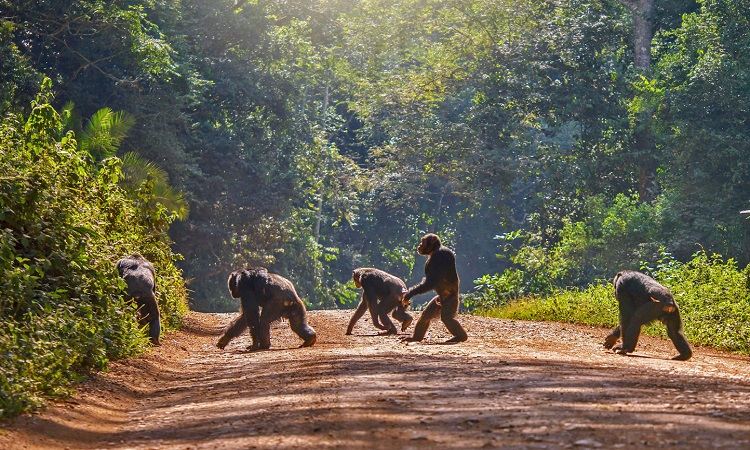
By the 1980s, Nyungwe was increasingly becoming important to scientists and conservationists.
Research began documenting the extraordinary biodiversity of the forest.
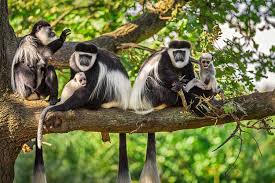
For example, biodiversity surveys documented enormous groups of Ruwenzori black-and-white colobus monkeys, demonstrating the exceptional importance of Nyungwe for primate conservation.
Research also helped establish that Nyungwe was not simply a forest with many animals.
It was an ecosystem with globally important biodiversity.
That scientific understanding became increasingly important in shaping future conservation.
1994: One of the Darkest Periods in Rwanda's History
The 1994 Genocide against the Tutsi and the war surrounding it caused enormous destruction throughout Rwanda.Nyungwe was also affected.
Research and tourism facilities were damaged, and many staff members were forced to flee. However, historical accounts note that some junior staff members remained and continued protecting the forest despite the extraordinary circumstances.
This is an important part of the park's resilience story.
While the country was experiencing catastrophic human suffering, people continued trying to protect this natural ecosystem.
After 1994, Rwanda entered a period of reconstruction and institutional rebuilding.
Nyungwe was part of that broader national recovery.
2005: A Major Turning Point—Nyungwe Becomes a National Park
The year 2005 changed Nyungwe's future.
The forest was officially established as Nyungwe National Park under Rwanda's legal framework. UNESCO confirms that the park was elevated from forest-reserve status to national-park status in 2005.
National-park status strengthened the legal framework for:
- wildlife protection;
- forest conservation;
- law enforcement;
- ecological monitoring;
- tourism development;
- community engagement;
- sustainable management.
The park also received a buffer zone under the legislation establishing it.
This marked the beginning of the modern Nyungwe conservation era.
2005 Onwards: Conservation and Tourism Begin Growing Together

After becoming a national park, Nyungwe increasingly developed as both a conservation area and a tourism destination. and Research, conservation programs and tourism infrastructure expanded.
A tourism revenue-sharing approach was also established in 2005, with the intention of connecting conservation with community development. Research on Nyungwe's tourism history notes that tourism infrastructure and visitor numbers subsequently increased.
The logic was powerful:
If the forest attracts visitors, tourism can generate income; if tourism generates income, communities can benefit; and if communities benefit, conservation can become more economically meaningful.
2006 and the Development of Ecotourism
After national-park designation, ecotourism began receiving greater attention.
USAID-supported initiatives known as Nyungwe Nziza, meaning "Beautiful Nyungwe," helped develop sustainable tourism around the park. Historical documentation links these efforts with the development of tourism infrastructure, including the Uwinka Interpretation Centre.
This period helped transform Nyungwe from a place primarily known to conservationists and researchers into a destination increasingly accessible to travelers.
The concept was not to turn the rainforest into a conventional mass-tourism destination.
Instead, the objective was to develop nature-based tourism that could support conservation.
That philosophy eventually led to experiences such as:
- guided forest hiking;
- chimpanzee trekking;
- primate tracking;
- birdwatching;
- canopy experiences;
- waterfall hikes;
- cultural tourism.
The Rise of Chimpanzee Tourism

As conservation and tourism infrastructure improved, chimpanzee trekking in Nyungwe National Park became one of Rwanda's most distinctive wildlife experiences.
The importance of this experience comes directly from the forest's ecological significance.
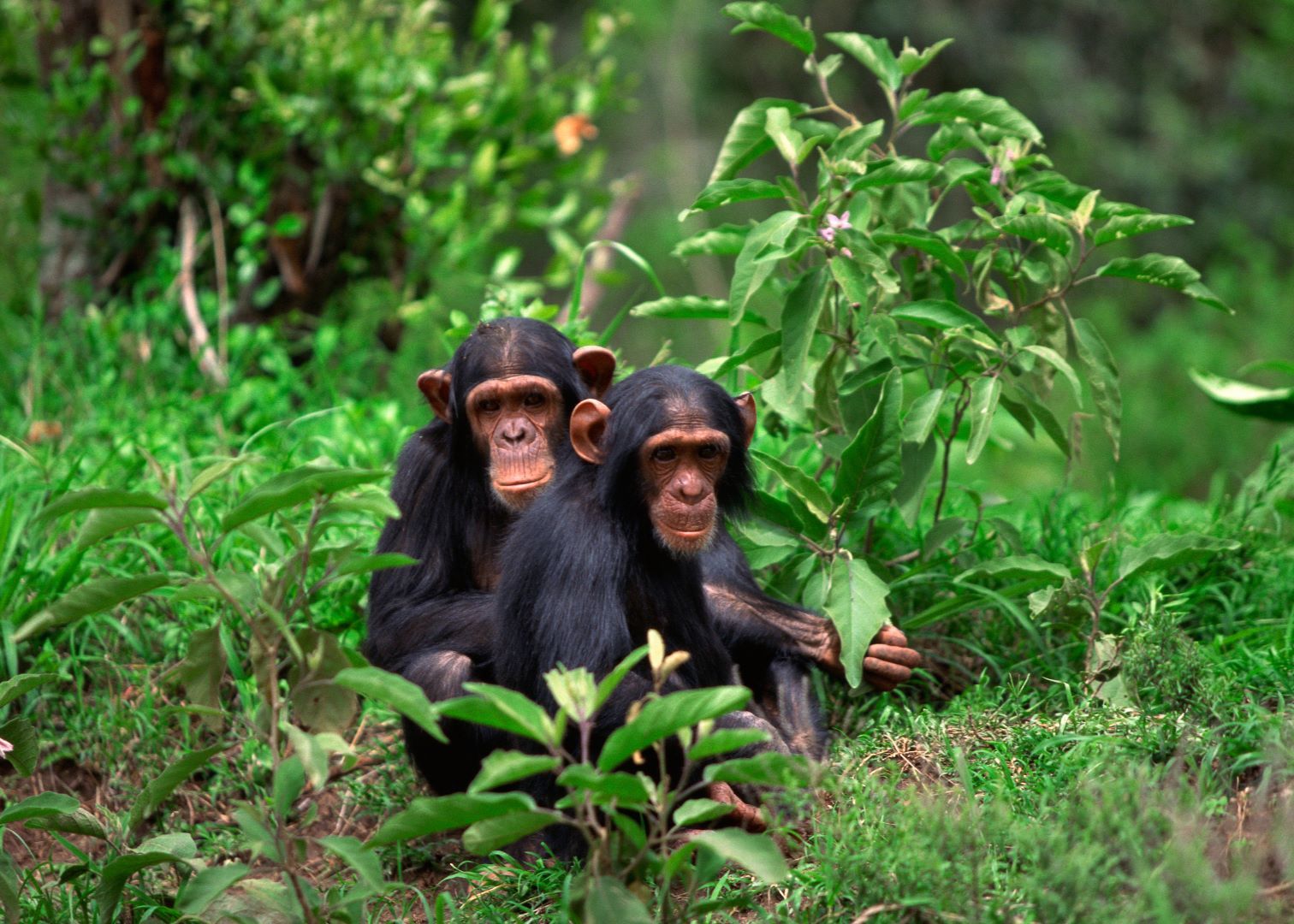
UNESCO identifies the Eastern Chimpanzee as one of the globally threatened species for which Nyungwe provides important habitat. The park is also home to an exceptional primate community.This gives chimpanzee trekking a much deeper meaning.
2020: Another Major Turning Point in Park Management
Another major chapter began in 2020.
The Government of Rwanda and African Parks entered a 20-year management partnership for Nyungwe National Park. African Parks says the agreement was signed in October 2020.
The purpose of the partnership is broader than tourism.
It includes:
- restoring ecosystems;
- strengthening conservation;
- improving park management;
- supporting communities;
- developing sustainable revenue;
- improving tourism;
- monitoring wildlife;
- protecting biodiversity.
UNESCO describes the park as having transitioned from government management to a public-private partnership with African Parks, with on-the-ground management delegated to the Nyungwe Management Company.
This represents another stage in Nyungwe's evolution.
2023: Nyungwe Becomes a UNESCO World Heritage Site
Then came one of the most important moments in the entire history of Nyungwe.
On 19 September 2023, UNESCO officially inscribed Nyungwe National Park on the World Heritage List.
It became Rwanda's first natural World Heritage Site.
This was an enormous international recognition of the forest's value.
UNESCO recognized Nyungwe under criterion (x), which concerns important habitats for the conservation of biological diversity, including threatened species.
UNESCO describes Nyungwe as one of Africa's most biologically important and diverse Afromontane forests.
Therefore, the UNESCO designation provides one of the strongest arguments for explaining why Nyungwe belongs among Africa's outstanding nature destinations.
Nyungwe Today: Conservation Is Still a Continuing Story
It is important not to present Nyungwe's story as if all conservation challenges have disappeared.
They have not.
UNESCO continues to identify issues such as:
- encroachment;
- illegal mining;
- infrastructure and traffic pressures;
- the need for stronger buffer-zone management;
- the importance of community engagement;
- the need to maintain ecological connectivity.
This actually makes the conservation story more interesting.
Nyungwe is not a finished conservation project.
It is an ongoing one.
Current management includes wildlife monitoring, law enforcement and efforts to address threats such as poaching and illegal gold and coltan mining.
At the same time, community partnerships and cooperatives are being developed around the park.
UNESCO notes initiatives involving tea production, milk, fish farming, livestock, honey and surveillance cooperatives, while tourism revenue-sharing mechanisms are designed to support neighboring communities.
Today, Nyungwe is one of Rwanda's most important conservation and tourism destinations. Visitors come for chimpanzee trekking, primate encounters, rainforest hiking, birdwatching, waterfalls, the Canopy Walkway and other forest adventures.
Nyungwe's Historical Journey
1933 → Forest Reserve
↓
Decades of conservation challenges
↓
2005 → National Park
↓
Expansion of conservation and tourism
↓
2020 → African Parks management partnership
↓
2023 → UNESCO World Heritage Site
↓
2026–2027 → Growing destination for chimpanzee trekking and rainforest tourism
Nyungwe: The Great Forest Experience
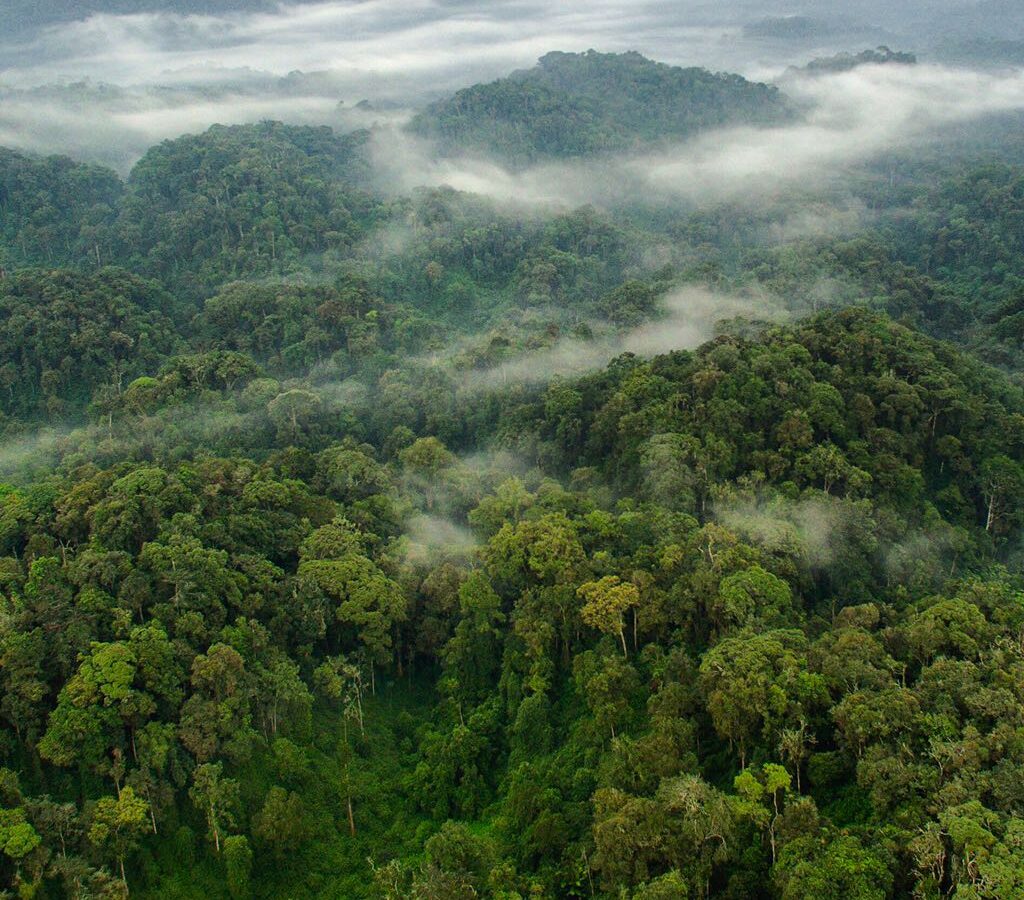
Nyungwe's strength is intimacy, biodiversity and immersion.
Instead of watching thousands of animals moving across an open plain, you enter an ancient forest where the wildlife is hidden within layers of vegetation.
The experience is slower and more exploratory.
You are not simply looking for animals.
You are learning how to read a rainforest.
Akagera Is Different Again
Akagera National Park offers Rwanda's classic savannah safari experience, with open landscapes, wetlands, lakes and opportunities to see the Big Five.
Nyungwe complements Akagera rather than competing directly with it.
Akagera gives you the savannah safari.
Nyungwe gives you the rainforest safari.
This is why travellers who have enough time should consider combining both.
A Rwanda safari can therefore provide two dramatically different ecosystems within one country:
Akagera → savannah, wetlands and classic game drives
Nyungwe → rainforest, chimpanzees, primates, birds, hiking and canopy adventures
That ecological variety is one of Rwanda's greatest tourism strengths.
Why Game Drive Strategy in Nyungwe Is Completely Different
One important point for first-time visitors is that Nyungwe is not primarily a game-drive destination.
If you arrive expecting the same safari strategy used in Serengeti or Akagera, you may misunderstand what makes this forest special.
In Akagera, a safari vehicle can cover significant distances across open savannah searching for lions, elephants, buffalo, giraffes, rhinos and other wildlife.
In Nyungwe, the forest is dense and mountainous.
Therefore, the main strategy is walking and tracking.
The Best Nyungwe Wildlife Strategy
A strong Nyungwe itinerary combines:


Forest hiking
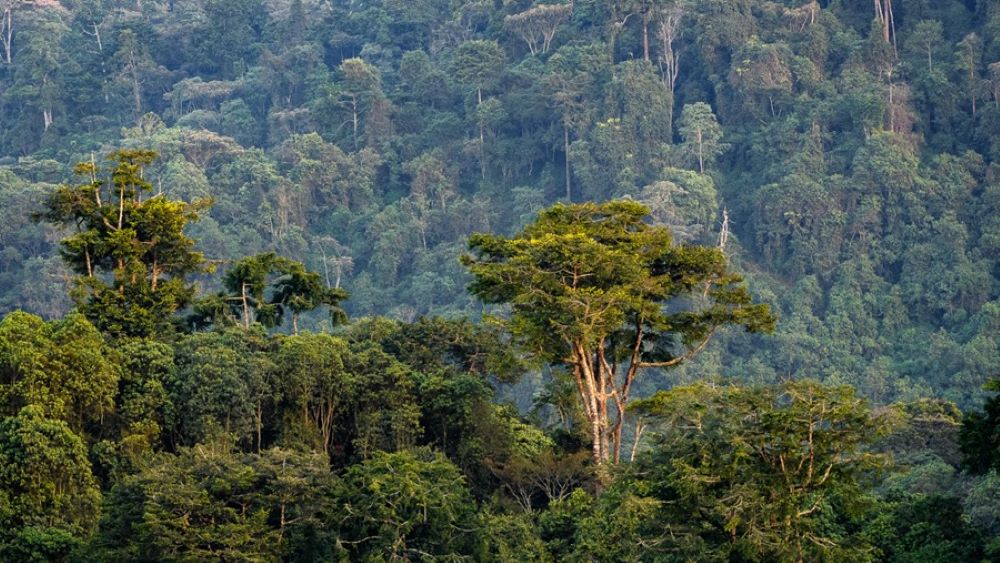
Waterfall trails

- Birdwatching
- Other primate tracking
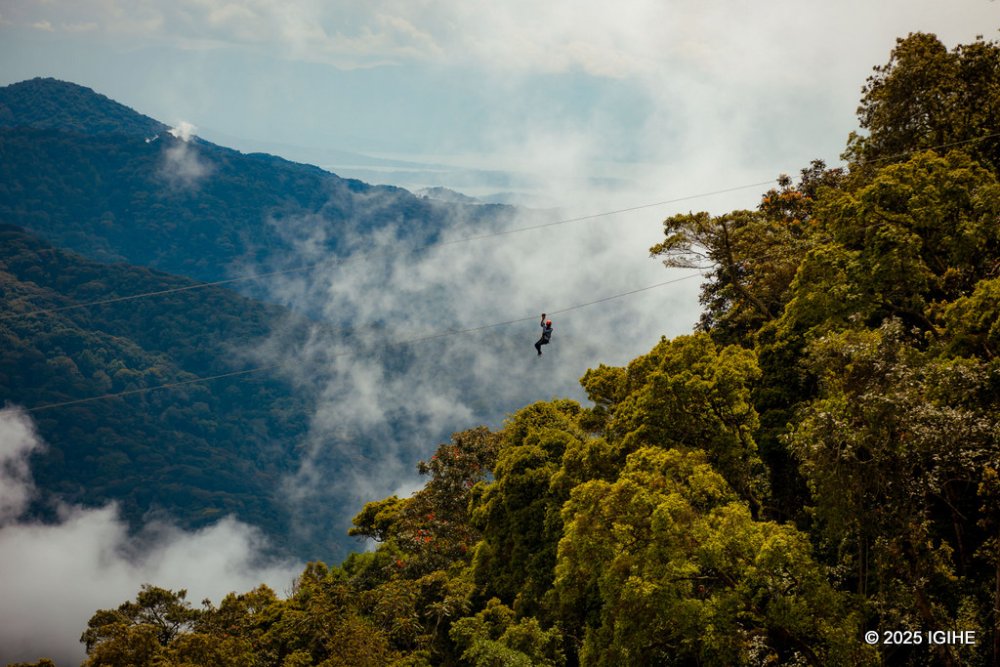
Nyungwe Zipline
- Cultural and tea experiences
Instead of spending an entire day inside a vehicle, you spend more time moving through the ecosystem itself.
That is exactly what makes Nyungwe chimpanzee trekking tours so different from conventional African game drives.
Things to Do in Nyungwe National Park Beyond Chimpanzee Trekking
Chimpanzee trekking is the headline attraction, but it is only the beginning.
Nyungwe offers a surprisingly diverse collection of activities.
1. Nyungwe Canopy Walkway

The Nyungwe Canopy Walk is one of the most iconic experiences in Rwanda.
The suspended walkway takes visitors high above the rainforest canopy, offering extraordinary views across the forest and surrounding mountains.
The experience begins from the Uwinka area and is guided.
Imagine standing above an ancient rainforest while mist moves between distant mountains and birds fly through the canopy below you.
That is not a normal hiking experience.
It is a completely different way of seeing the forest.
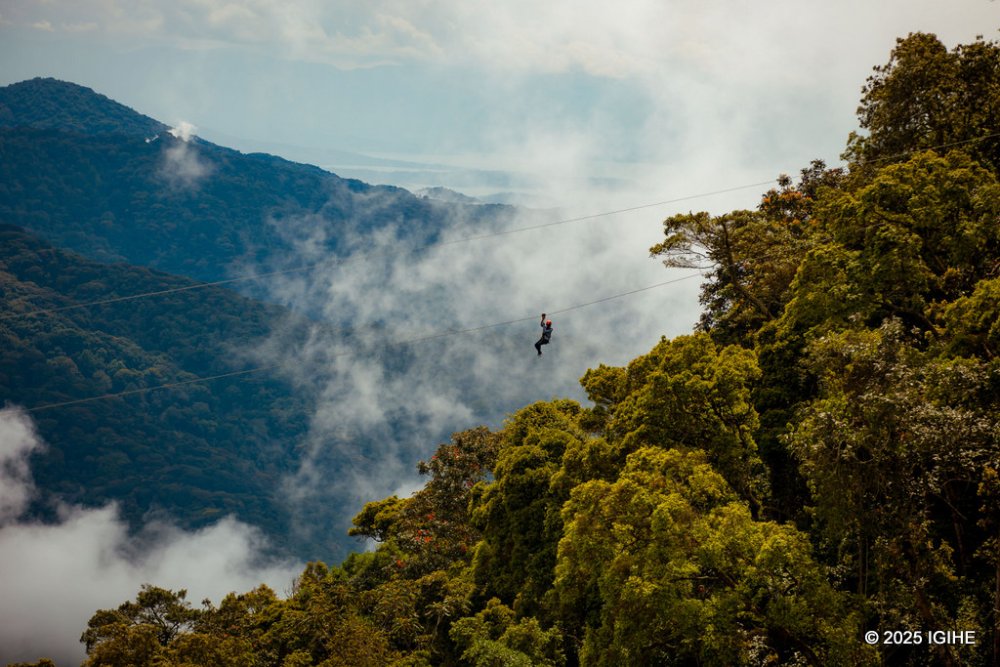
2. Nyungwe Zipline

For travellers who want more adrenaline, Nyungwe has a spectacular zipline experience.
The Nyungwe Zipline stretches approximately 1,935 metres, making it one of the longest ziplines in Africa.
Instead of simply looking at the rainforest from the ground, you fly above it.
The experience is particularly attractive for travellers who want to combine wildlife and adventure during the same Rwanda safari.
3. Isumo and Other Waterfall Experiences

Nyungwe's waterfalls provide another side of the forest.
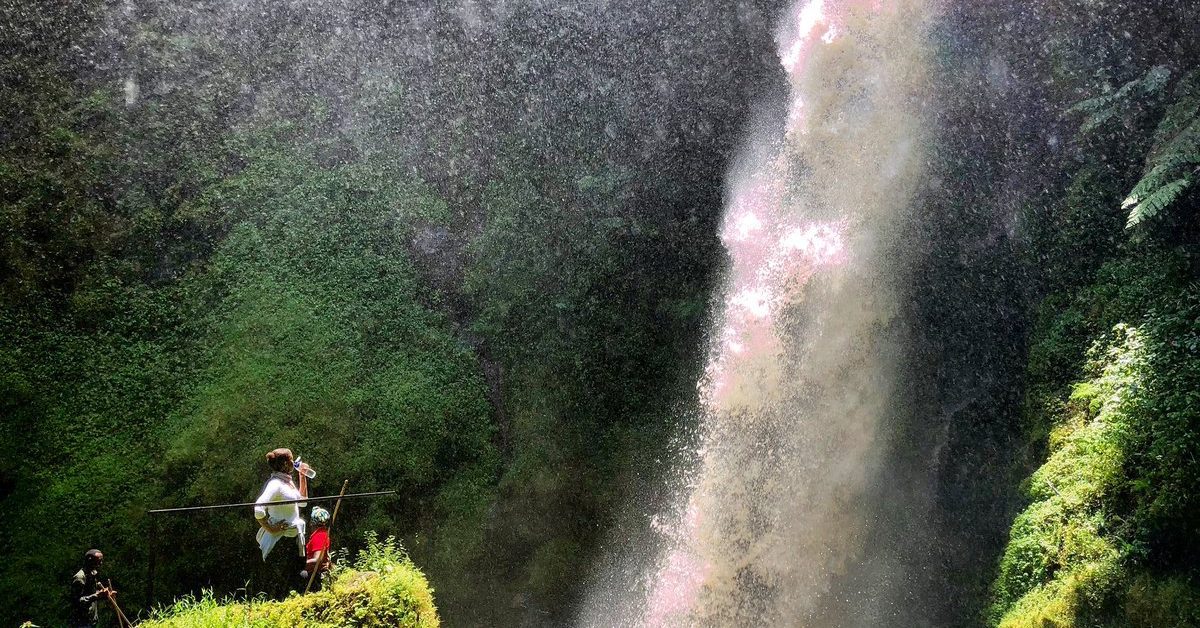
Waterfall trails allow visitors to leave the main roads and walk through the rainforest while experiencing streams, dense vegetation, mountain terrain and cascading water.
The park and tourism authorities highlight Ndambarare and Kamiranzovu among Nyungwe's waterfall experiences.
These trails are especially rewarding for travellers who enjoy photography and nature walks.
4. Forest Hiking
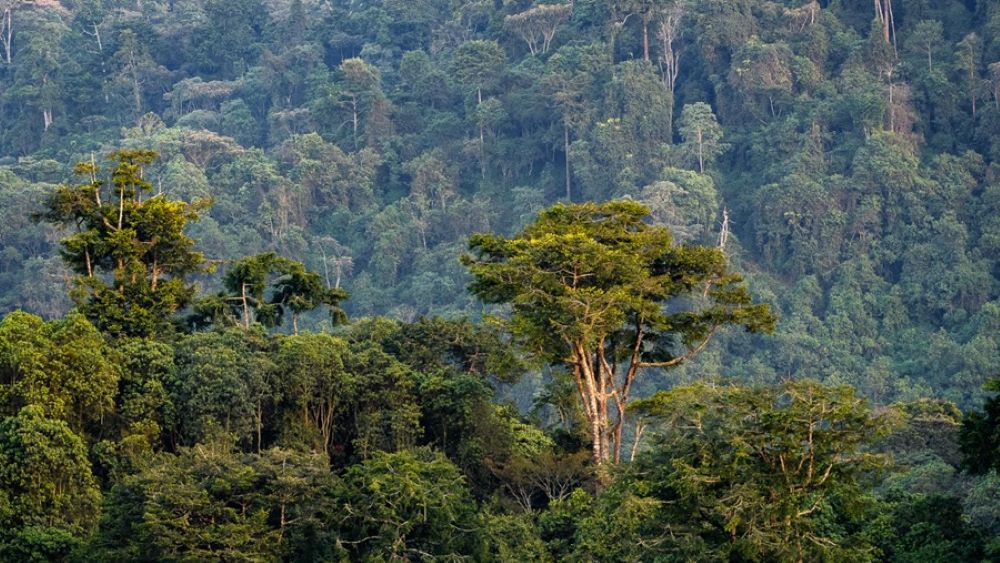
Nyungwe has an extensive network of hiking trails.
Depending on your interests and physical ability, hiking can be combined with chimpanzee trekking, waterfalls, birdwatching, primate observation and panoramic viewpoints.
The forest environment changes continuously.
One section can be thick with giant trees.
Another can open toward mountain scenery.
Then you may encounter bamboo, wetlands, streams or a completely different vegetation zone.
5. Birdwatching

Nyungwe is one of Rwanda's strongest destinations for bird enthusiasts.
Current conservation sources record hundreds of bird species, including species associated with the Albertine Rift.
For serious birdwatchers, a specialist guide can transform the experience because many forest birds are easier to identify by sound before they are visible.
6. Other Primate Experiences
Chimpanzees are not the only primates in Nyungwe.
The park is home to 13 primate species, including L'Hoest's monkeys and black-and-white colobus monkeys.
This means a chimpanzee trekking trip can become a broader primate safari.
7. Tea and Community Experiences
Nyungwe's surroundings also provide opportunities to connect tourism with local communities.
Tea plantations near the forest offer a striking contrast between cultivated landscapes and ancient rainforest.
Some accommodation and community experiences include tea-related activities and cultural encounters, allowing visitors to understand how communities around Nyungwe interact with the landscape.
This is important because responsible tourism should not only protect wildlife; it should also create reasons for neighbouring communities to value conservation.
Can You Visit Nyungwe in three Day from Kigali?
Yes, some Nyungwe experiences can be organised as a very long one-day trip from Kigali, but travellers need to understand the difference between what is technically possible and what is genuinely comfortable.
Nyungwe is approximately 225–230 km from Kigali, and the road journey commonly takes around five to six hours depending on traffic, stops and road conditions.
three-Day Chimpanzee Trekking from Kigali

A same-day Kigali–Nyungwe–Kigali chimpanzee trekking trip is not the itinerary we would recommend for most travellers.
The reason is simple.
Chimpanzee trekking requires an early start, while the drive from Kigali to Nyungwe is already several hours.
Trying to combine the long road journey, early chimpanzee activity and return drive can make the experience rushed and exhausting.
For chimpanzee trekking, two days is much better.
One-Day Canopy Walk and Zipline Experience

A one-day Nyungwe adventure can be more realistic when the focus is on activities such as the canopy experience and zipline, although it remains a very long day from Kigali.
For travellers with limited time, Seek Wild Africa can assess the desired activity, departure time and road schedule and build the most practical itinerary rather than simply promising that everything can fit into one day.
The Perfect 3-Day Chimpanzee Trekking Tour in Nyungwe from Kigali
For travellers who want to experience the forest properly, this is the itinerary we recommend.
Day 1: Kigali → Nyungwe National Park → Canopy Walk → Forest Experience
Early Morning: Departure from Kigali
Your journey begins early in Kigali.
A professional driver-guide from Seek Wild Africa picks you up and begins the journey toward southern Rwanda.
The road itself becomes part of the experience.
As Kigali disappears behind you, the landscape gradually changes into rolling hills, rural communities, tea plantations and mountain scenery.
Midday: Continue Toward Nyungwe
The journey continues toward the forest.
Depending on the timing and your interests, we can arrange appropriate stops along the route for refreshments, photography and cultural experiences.
Afternoon: Arrival at Nyungwe
After arrival, you check in at your accommodation and have time to rest.
If the schedule allows, this is an excellent time for a first forest experience.
Late Afternoon: Nyungwe Canopy Walk

The afternoon canopy experience gives you your first major encounter with the rainforest from above.
You cross the suspended walkway while looking across the treetops and mountain landscape.
Evening: Lodge Dinner and Preparation
Return to your lodge for dinner and rest.
Your guide will also help you prepare for the following morning's chimpanzee trek.
This early preparation matters because chimpanzee trekking requires appropriate clothing, footwear, water and physical readiness.
Overnight in or near Nyungwe National Park.
Day 2: Chimpanzee Trekking → Waterfall or Forest Experience → Kigali
Early Morning: Chimpanzee Trekking

This is the central moment of the journey.
After an early breakfast, you head to the designated meeting point and join the trekking experience.
Your guide and trackers work with you to locate the chimpanzee community.
The forest becomes your safari vehicle.
You follow trails, listen for calls and observe signs of movement.
Once you locate the chimpanzees, you spend time observing them according to park guidelines.
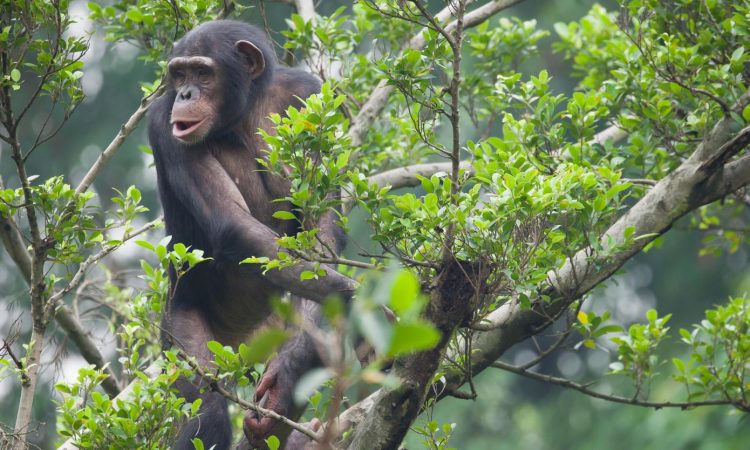
The experience can include watching them feeding, climbing, communicating, resting or moving through the trees.
Midday: Return from the Forest
After the trek, return for lunch and a short rest.
Afternoon: Waterfall or Forest Trail

Depending on the available time, weather and your physical condition, we can add a waterfall or forest experience.
This gives you an opportunity to see another side of Nyungwe before leaving.
Late Afternoon: Drive Back Toward Kigali
Begin the journey back to Kigali.
Although it is a long travel day, the experience is rewarding because you leave Nyungwe having experienced both its biodiversity and its conservation story.
One-Day Nyungwe Zipline and Canopy Walk Itinerary
For travellers who cannot spend a night in Nyungwe, we can design a one-day adventure focused on the forest's aerial experiences.
Early Morning
05:00–05:30 — Pick-up in Kigali
Morning
05:30–11:30 — Drive Kigali → Nyungwe, with carefully selected stops depending on the group.
Midday
11:30–12:30 — Lunch/rest and preparation
Afternoon
13:00–15:00 — Nyungwe Canopy Walk
Experience the rainforest from above.
Later Afternoon
15:00–16:30 — Nyungwe Zipline experience, subject to activity scheduling and operational availability.
Evening
16:30 onward — Begin the return journey to Kigali.
This is an ambitious itinerary and should be planned around current activity availability, weather and road conditions.
For travellers who can afford an overnight stay, we strongly recommend extending the trip.
Where to Stay in and Around Nyungwe National Park
Accommodation is an important part of the experience because Nyungwe is far enough from Kigali that staying overnight makes the safari much more comfortable.
One&Only Nyungwe House

For travellers seeking a luxury rainforest experience, One&Only Nyungwe House is one of the most prestigious accommodation options in the area.
The property sits beside the forest within the Gisakura tea landscape and offers luxury rooms, villas and canopy accommodation.
The resort also offers nature and cultural experiences, including birdwatching and tea-related activities.
Its accommodation includes forest-view options and elevated canopy accommodation designed to immerse guests in the surrounding environment.
This is particularly suitable for:
- Luxury honeymoon travellers
- High-end safari travellers
- Families seeking premium accommodation
- Travellers celebrating a special occasion
- Visitors wanting a complete rainforest-lodge experience
Nyungwe Top View Hill Hotel

Another option is Nyungwe Top View Hill Hotel, located near the park area and known for its elevated views across the surrounding landscape and tea plantations.
It can be a practical choice for travellers looking for accommodation outside the premium luxury category.
Other Accommodation Options
Depending on the traveller's budget and itinerary, options can also include:
- Guesthouses
- Campsites
- Park-associated accommodation
- Lodges around Gisakura
- Accommodation around the wider Nyungwe area
The right choice depends on whether your priority is luxury, proximity, budget, comfort, family travel or adventure.
What Makes Nyungwe Unique in Africa?
Nyungwe's greatest strength is not one single animal.
It is the combination of experiences.
It is an African safari for people who want to walk, explore, listen, climb, observe and understand, not simply sit inside a vehicle.
What Should You Bring for a Nyungwe Chimpanzee Trek?
Because Nyungwe is a rainforest, preparation matters.
Essential items include:
- Lightweight, breathable hiking clothes
- Long trousers
- Long-sleeved shirt
- Waterproof hiking boots
- Lightweight rain jacket or poncho
- Small waterproof backpack
- Reusable refillable water bottle
- Binoculars
- Camera
- Extra camera batteries or power bank
- Insect repellent
- Sunscreen
- Hat
- Personal medication
- Small snacks where permitted
- Waterproof protection for electronics
Bring a Reusable Water Bottle
One of the most important recommendations is to avoid relying on single-use plastic bottles.
Rwanda has strong national restrictions on plastic carry bags and many single-use plastic items under its environmental law.
Visitors should therefore travel with a durable reusable water bottle, preferably:
- Stainless-steel insulated bottle
- High-quality reusable hard-plastic bottle designed for repeated use
- BPA-free reusable bottle
- Filter bottle where appropriate
A 1-litre reusable bottle is a practical choice for a forest trekking day, although your guide can advise you based on the activity and available refill points.
When visiting Nyungwe:

- Never litter.
- Do not remove plants, flowers or natural materials.
- Follow your guide's instructions.
- Maintain the required distance from wildlife.
- Do not feed animals.
- Keep noise low during wildlife encounters.
- Use reusable bottles.
- Respect local communities.
- Follow designated trails.
- Avoid disturbing chimpanzees and other wildlife.
- Support responsible local businesses and conservation initiatives.
The forest belongs to future generations as much as it belongs to today's travellers.
How Seek Wild Africa Helps You Experience Nyungwe
At Seek Wild Africa, we understand that organising a Rwanda safari involves much more than simply booking a vehicle.
We help travellers turn their available time into a realistic and well-organised experience.
We Can Help Organise:
Chimpanzee trekking in Nyungwe National Park
We help plan the appropriate chimpanzee trekking experience and coordinate the itinerary around the required timing.
Nyungwe Canopy Walk

We can include the canopy experience within your Nyungwe itinerary.
Nyungwe Zipline Adventures

For travellers looking for adrenaline, we can incorporate the zipline into an appropriate programme.
Waterfall and Forest Hiking

We can combine chimpanzee trekking with waterfall and forest experiences depending on your available time.
Accommodation

We help travellers choose accommodation according to their budget and preferred comfort level, from practical stays to luxury rainforest accommodation.
Professional Driver-Guide
The long Kigali–Nyungwe journey is much easier when you travel with an experienced professional driver-guide who understands Rwanda's roads, tourism destinations and itinerary timing.
Private Safari Planning
We can organise private trips for couples, families, friends, photographers, birdwatchers and solo travellers.
Combined Rwanda Safaris
If you want more than Nyungwe, we can help combine:
Kigali + Nyungwe + Akagera + Volcanoes National Park + Lake Kivu
into a larger Rwanda adventure.
Why Choose a three-Day Nyungwe Chimpanzee Trekking Tour?
Because Nyungwe should not be rushed.
A three-day journey gives you time to experience the destination rather than simply pass through it.
You can sleep near the forest.
You can wake up close to the ecosystem.
You can trek chimpanzees.
You can walk above the canopy.
You can experience waterfalls.
You can explore forest trails.
And you can return to Kigali with the feeling that you actually experienced Nyungwe.
Its strength is the rainforest experience.
Its story begins with an ancient forest, continues through decades of protection, survives periods of human pressure and develops through modern conservation partnerships.
Today, the combination of professional park management, biodiversity monitoring, forest restoration, community engagement, UNESCO recognition and sustainable tourism is creating a stronger future for the destination.
And for the traveller, that conservation story becomes an unforgettable adventure.
You enter the forest looking for chimpanzees.
You discover monkeys.
You hear birds.
You walk beneath ancient trees.
You stand above the canopy.
You hike toward waterfalls.
You fly across the forest on a zipline.
And somewhere between the first chimpanzee call and the final view of the mountains, you realise that Nyungwe is not simply somewhere you visit—it is somewhere you experience.
For travellers planning chimpanzee trekking in Rwanda in 2026 or 2027, Nyungwe National Park deserves serious consideration.
\
And if you want to experience it properly, Seek Wild Africa can help organise the entire journey—from Kigali transportation and professional driver-guides to chimpanzee trekking, accommodation, canopy walks, zipline adventures, waterfall experiences and customised Rwanda safari itineraries.
Your Nyungwe adventure starts with the decision to enter the forest. Let Seek Wild Africa help you make every kilometre count.