Gorilla Naming Ceremony 2026: 22 Mountain Gorilla Babies to Receive Names in Rwanda
September 04, 2026Clementine

Kwita Izina 2026: Celebrating Rwanda’s Mountain Gorillas Through Names, Culture and Conservation
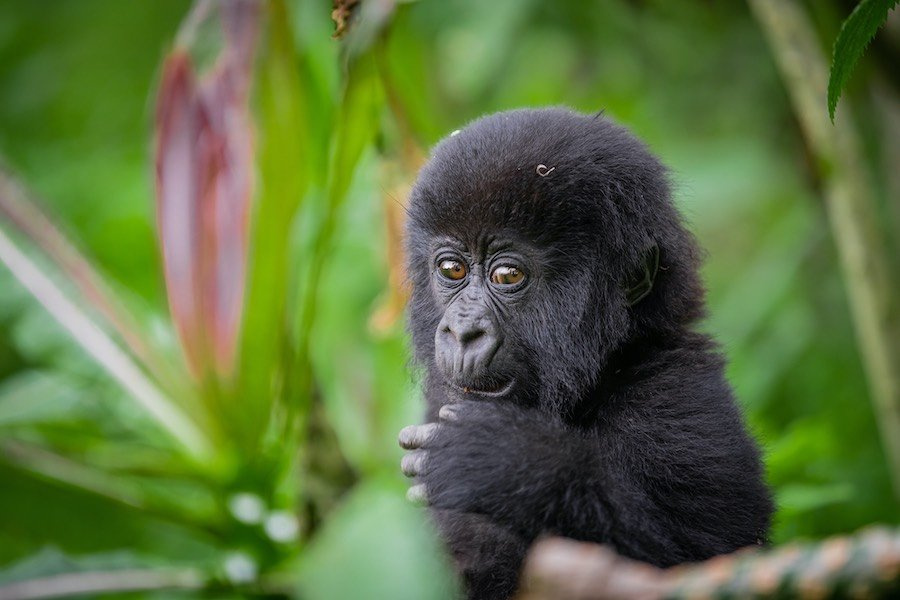
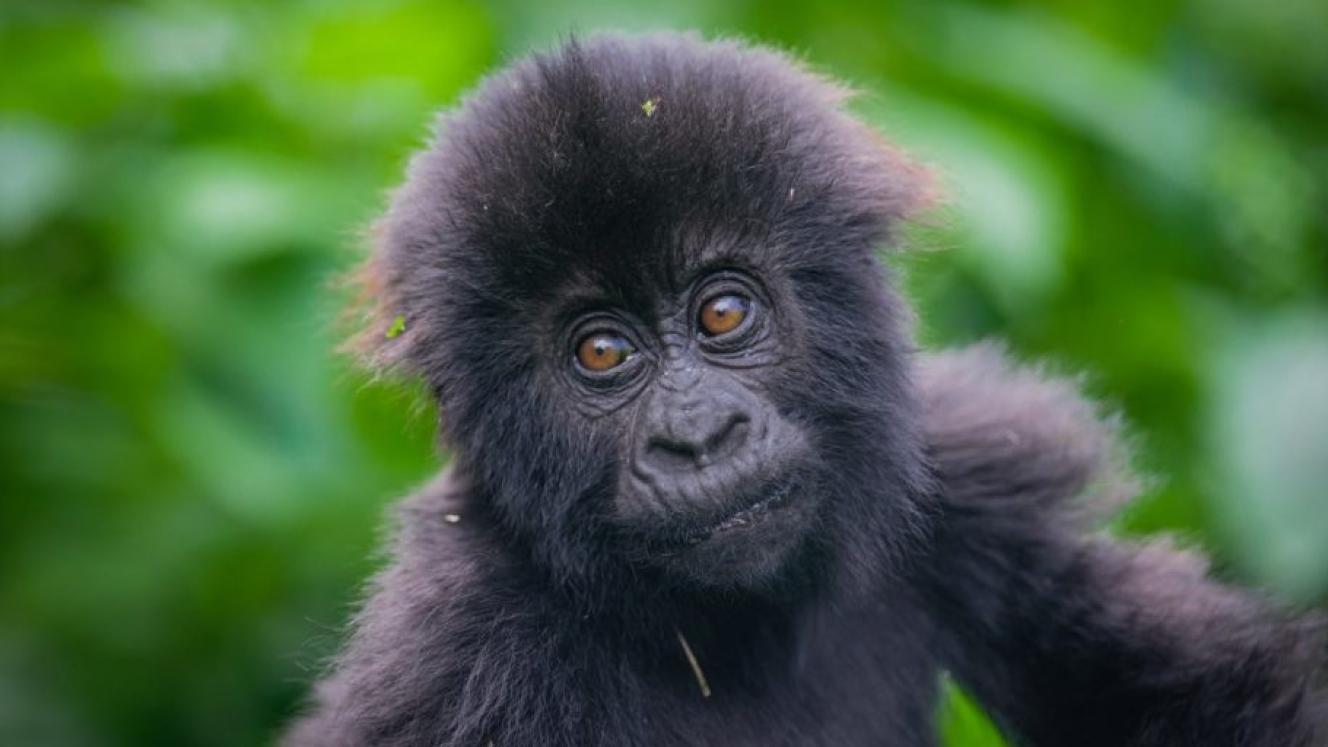
The ceremony will honour 22 mountain gorilla babies, each of whom will receive a name during one of Rwanda’s most important conservation celebrations.
Kwita Izina is not simply an event where gorillas are given names. It is a national celebration of life, heritage, conservation and the people working to protect mountain gorillas.
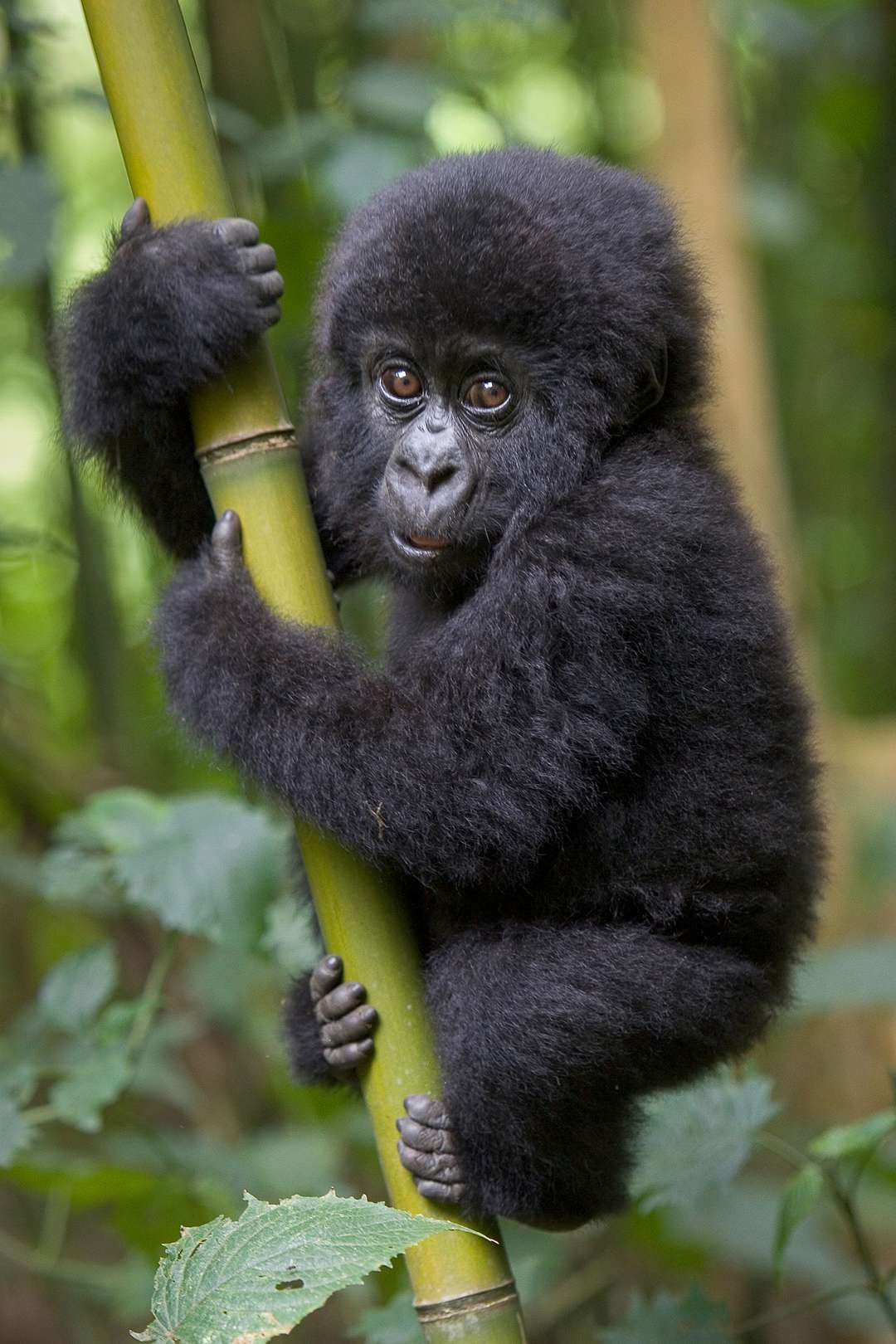
Every name given during the ceremony carries meaning. It connects a young gorilla to its family, its forest habitat, Rwanda’s conservation history and the global effort to protect one of the world’s most endangered animals.
For visitors, Kwita Izina 2026 offers a unique opportunity to learn about Rwanda’s gorilla conservation work, witness the importance of naming in Rwandan culture and explore the home of the mountain gorillas in Volcanoes National Park.
What Is Kwita Izina?
The Meaning of the Gorilla Naming Ceremony
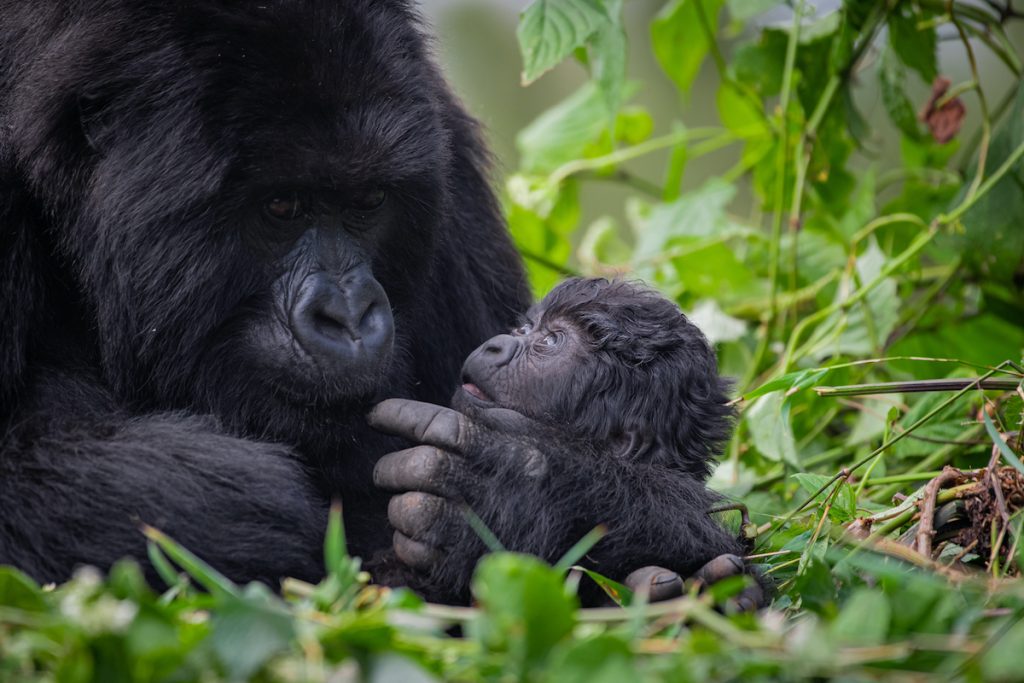
Kwita Izina is a Kinyarwanda expression meaning “to give a name.”
In Rwanda, naming is an important cultural tradition. Families and communities gather to celebrate the arrival of a newborn child and formally give the child a name.
Rwanda adapted this tradition for wildlife conservation when the first official Gorilla Naming Ceremony was held in 2005.
Since then, Kwita Izina has become an internationally recognised event dedicated to mountain gorillas and the people protecting them.

The ceremony reflects a powerful idea: mountain gorillas are not anonymous animals. They are individuals with families, personalities, histories and important roles within their groups.
Giving each gorilla a name helps people recognise and remember them while strengthening the connection between conservationists, communities and the animals they protect.
Why Are Mountain Gorillas Given Names?
Names Help Conservationists Identify Individual Gorillas

Mountain gorilla families live in close social groups. Each family may include a dominant silverback, adult females, young gorillas, infants and other members with different relationships and behaviours.
Because conservationists monitor these groups over many years, identifying individual gorillas is essential.
A name helps rangers, trackers, researchers and veterinarians record important information about a gorilla, including:
- Its birth date or estimated age
- Its mother and family group
- Its physical development
- Its health history
- Its behaviour
- Its social relationships
- Its movement between groups
- Its role within the family
The name becomes part of the gorilla’s official conservation record.
Names Create a Personal Connection

A name also helps people connect emotionally with mountain gorillas.
When a gorilla is known by name, visitors, researchers and conservation supporters can follow its story over time.
They may learn about a young gorilla growing up, a silverback leading a family, a mother caring for an infant or a gorilla moving into a new social group.
This personal connection encourages greater interest in gorilla protection.
Names Honour Conservation Values
Many gorilla names reflect important values, hopes, places, people or conservation achievements.
A name may represent:
- Strength
- Peace
- Hope
- Protection
- Family
- Nature
- Rwanda’s heritage
- The future of conservation
For this reason, the naming ceremony is both a cultural tradition and a conservation tool.
Kwita Izina 2026: 22 Gorilla Babies to Receive Names
A Celebration of New Life

The main focus of Kwita Izina 2026 will be the 22 mountain gorilla babies receiving names.
Each baby represents new life in the forest and the continuing recovery of the mountain gorilla population.
The birth of a gorilla is important because mountain gorillas remain endangered and depend on careful protection.
Every infant that survives and grows within a healthy family group represents the success of many conservation efforts.
These efforts include:
- Ranger patrols
- Veterinary care
- Scientific research
- Gorilla monitoring
- Habitat protection
- Community participation
- Responsible tourism
The 22 babies being named in 2026 therefore represent more than individual animals. Together, they symbolise the future of Rwanda’s mountain gorilla population.
The Theme of Kwita Izina 2026

The 2026 ceremony will take place under the theme:
“Conservation is Life: Sustaining the Future.”
This theme reflects the meaning behind the naming ceremony.
Protecting mountain gorillas is not only about saving a species. It is also about protecting the forests, supporting surrounding communities, preserving Rwanda’s natural heritage and creating a future in which people and wildlife can thrive together.
Who Gives Names to the Gorilla Babies?
The Role of the Namers
Each baby gorilla is given a name by a distinguished guest known as a Namer.
Namers may come from different backgrounds, including:
- Conservation
- Science
- Tourism
- Sport
- Entertainment
- Business
- Government
- Community leadership
- International development
Being selected as a Namer is a significant honour.
The Namer becomes connected to the gorilla and to Rwanda’s wider conservation story.
The role is not simply ceremonial. It draws attention to the responsibility of protecting mountain gorillas and encourages more people around the world to support conservation.
Why the Namers Matter

The Namers help bring international attention to the importance of mountain gorilla protection.
Their participation allows the message of Kwita Izina to reach audiences beyond Rwanda.
They also help demonstrate that conservation is a shared responsibility.
Protecting mountain gorillas requires cooperation between governments, local communities, conservation organisations, researchers, tourism companies, visitors and international supporters.
What Happens During the Gorilla Naming Ceremony?
The Main Event in Kinigi

The event brings together:
- Rwandan leaders
- Conservationists
- Researchers
- Rangers
- Veterinarians
- Local communities
- Tourism professionals
- International guests
- Distinguished Namers
- Wildlife supporters
The ceremony combines formal speeches, cultural performances, conservation messages and the presentation of the gorilla names.
The atmosphere is both celebratory and meaningful because every name represents a commitment to the future of mountain gorillas.
A Celebration of Each Gorilla

The naming ceremony gives attention to the individual gorillas being honoured.
Rather than speaking about mountain gorillas only as a population, Kwita Izina celebrates them as living members of families and communities.
The ceremony reminds the world that conservation is ultimately about protecting individual animals and the natural systems that support them.
The Cultural Meaning of Naming in Rwanda
From Human Birth Ceremonies to Gorilla Conservation

In Rwandan culture, naming a child is a meaningful family and community event.
A name may express the circumstances surrounding a birth, the hopes of the family or the values they wish the child to carry.
Kwita Izina brings this cultural meaning into the world of conservation.
The tradition shows that wildlife protection can be connected to local culture rather than treated as something separate from everyday life.
By naming gorillas, Rwanda presents them as part of the country’s natural heritage.
A Symbol of Belonging
A name gives a gorilla a recognised place within the conservation community.
It helps people remember the animal and follow its life.
The name also creates a bridge between the gorilla’s forest home and the people who work to protect it.
This is one of the most powerful aspects of Kwita Izina: the ceremony makes conservation personal, cultural and memorable.
The Conservation Story Behind the 22 Gorilla Babies
Protecting Mountain Gorilla Families

Rangers monitor the forest and help protect gorilla groups from threats.
Trackers follow the families and record their movements.
Veterinarians provide medical care when gorillas are injured or ill.
Researchers study their behaviour, health and social relationships.
Tourism contributes funding that supports conservation and community development.
The survival of each baby depends on this combined effort.
The Role of Gorilla Monitoring

Gorilla monitoring allows conservation teams to understand what is happening within each family.
Trackers may record:
- New births
- Injuries
- Illnesses
- Family changes
- New silverbacks
- Group movements
- Social conflicts
- Changes in behaviour
Because individual gorillas have names, these records can be detailed and accurate.
This information helps conservationists make better decisions and respond quickly when a gorilla needs assistance.
Kwita Izina and the Communities Around Volcanoes National Park
Conservation Benefits People and Wildlife

Mountain gorilla conservation cannot succeed without the support of communities living near Volcanoes National Park.
Local people share the landscape with the forest and depend on the surrounding environment in different ways.
Conservation programmes therefore work to ensure that communities benefit from protecting the gorillas.
Tourism linked to gorilla trekking and Kwita Izina supports:
- Employment
- Local businesses
- Accommodation providers
- Restaurants
- Transport services
- Cultural groups
- Community projects
- Education initiatives
When communities benefit from conservation, protecting the gorillas becomes a shared priority.
Kwita Izina as a Community Celebration

Kwita Izina is also an opportunity to celebrate the people who live near the gorilla habitat.
The event highlights the contribution of local communities, rangers, guides, trackers and conservation workers.
Their daily efforts make it possible for mountain gorilla families to survive and for visitors to experience them responsibly.
Where the Named Gorillas Live
Volcanoes National Park
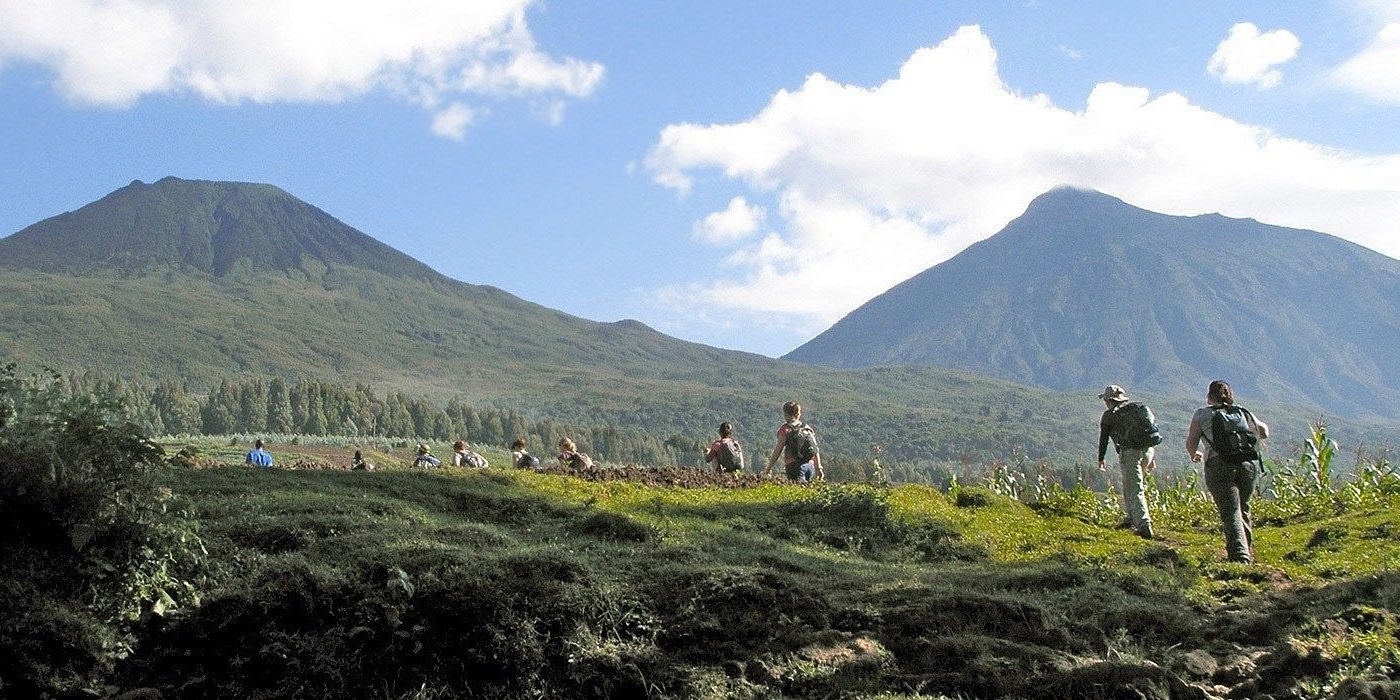
The park forms part of the wider Virunga volcanic ecosystem, which extends across Rwanda, Uganda and the Democratic Republic of Congo.
Volcanoes National Park is characterised by:
- Mist-covered mountains
- Bamboo forests
- Dense vegetation
- High-altitude habitats
- Volcanic slopes
- Rich biodiversity
The park is home to Rwanda’s mountain gorilla families and provides the forest environment where the 22 babies being named in 2026 will grow up.
The Virunga Volcanoes
The park is surrounded by several impressive volcanoes, including:
- Mount Karisimbi
- Mount Bisoke
- Mount Muhabura
- Mount Gahinga
- Mount Sabyinyo
Mount Karisimbi is the highest, rising to approximately 4,507 metres.
These mountains form an important part of the landscape associated with Rwanda’s gorillas.
Can Visitors See the Gorillas Being Named?
Gorilla Trekking in Volcanoes National Park

Visitors cannot attend the naming ceremony simply by joining a regular gorilla trek, and the baby gorillas being named may belong to different families.
However, travellers can experience the same protected forest through gorilla trekking in Volcanoes National Park.
During a trek, visitors are assigned to a gorilla family and accompanied by trained guides and trackers.
The experience may include seeing:
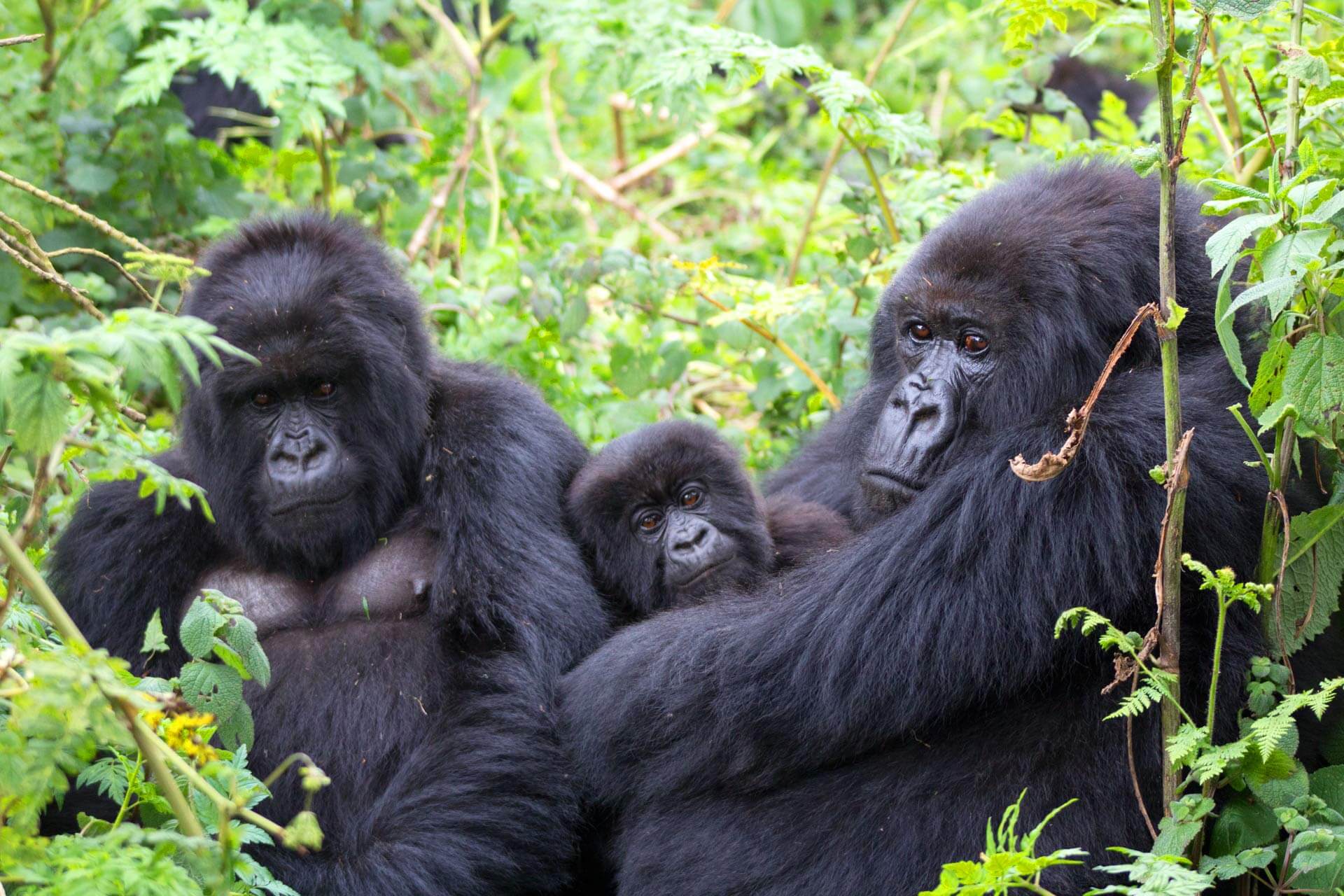
- Mothers caring for infants
- Young gorillas playing
- Silverbacks protecting their families
- Adult gorillas feeding
- Family members resting together
- Gorillas communicating through sounds and gestures
Every gorilla family has its own social structure and personality.
This makes each trek different.
Why Gorilla Trekking Supports Kwita Izina
Gorilla trekking is closely connected to the conservation story celebrated by Kwita Izina.
Tourism revenue helps support:
- Gorilla protection
- Ranger operations
- Veterinary services
- Research
- Community development
- Conservation education
By visiting Rwanda responsibly, travellers contribute to the system that protects the gorillas and their habitat.
Gorilla Trekking Rules That Protect the Named Gorillas
Visitors must follow strict guidelines when observing mountain gorillas.
These rules help reduce stress and protect the animals from disease.
Important guidelines include:
- Keep a safe distance from the gorillas
- Follow the instructions of the guide
- Avoid sudden movements
- Do not use flash photography
- Do not eat near the gorillas
- Do not touch the gorillas
- Avoid visiting when sick
- Keep voices low
- Do not leave rubbish in the forest
- Follow the permitted viewing time
These rules are especially important for young gorillas, whose health and development must be carefully protected.
How to Experience Kwita Izina 2026

Attend the Main Ceremony
Travellers interested in attending the main event should plan early and confirm access arrangements through official channels.
The ceremony takes place in Kinigi, Musanze, near Volcanoes National Park.
Because Kwita Izina attracts international guests and conservation supporters, accommodation and transportation should be arranged in advance.
Combine the Ceremony with Gorilla Trekking
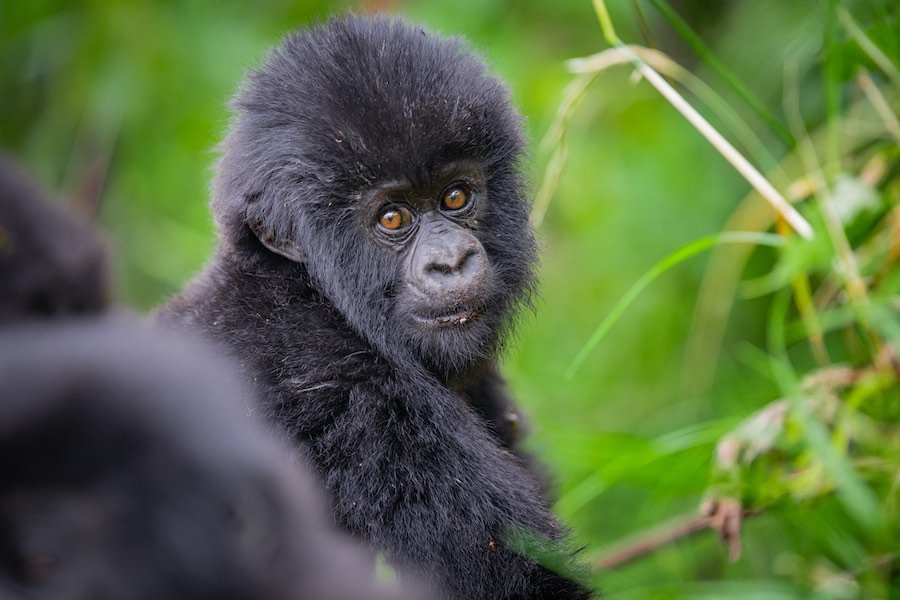
Visitors can combine their Kwita Izina experience with a gorilla trek.
This allows them to learn about the naming ceremony and then visit the forest where mountain gorilla families live.
A combined itinerary may include:
- Attendance at Kwita Izina activities
- Gorilla trekking
- A visit to the Dian Fossey area
- Golden monkey trekking
- Cultural experiences
- A tour of Musanze
- Volcano hiking
Explore the Conservation Story
Visitors can also learn more about gorilla conservation through:
- Guided talks
- Community visits
- Conservation exhibitions
- Cultural performances
- Ranger experiences
- Dian Fossey-related sites
- Local museums and interpretation centres
These activities help explain why naming individual gorillas is important and how conservation work is organised.
A 3-Day Kwita Izina and Gorilla Experience from Kigali
Day 1: Kigali to Musanze and Kinigi

Your journey begins in Kigali, where Seek Wild Africa can arrange pickup from Kigali International Airport or your hotel.
You travel north through Rwanda’s green countryside toward Musanze and Kinigi.
After arriving near Volcanoes National Park, you check into your accommodation and prepare for the following day.
Depending on the event schedule, you may attend a Kwita Izina-related activity or visit a nearby cultural attraction.
Overnight: Volcanoes National Park area.
Day 2: Kwita Izina or Gorilla Trekking

Depending on your travel dates and access arrangements, the day may focus on the main Kwita Izina ceremony or a gorilla trekking experience.
If attending the ceremony, you will witness the celebration of the 22 baby gorillas and learn more about the meaning behind their names.
If trekking, you will enter the forest with guides and trackers to observe a gorilla family in its natural habitat.
Both experiences provide a deeper understanding of Rwanda’s mountain gorilla conservation story.
Overnight: Volcanoes National Park area.
Day 3: Conservation and Return to Kigali

After breakfast, you may visit a cultural site, explore Musanze or learn more about the history of gorilla conservation before returning to Kigali.
Travellers with more time can extend their journey to:
- Akagera National Park
- Nyungwe National Park
- Lake Kivu
- Kigali
Other Experiences Near Volcanoes National Park
Kwita Izina and gorilla conservation should remain the main focus of your visit, but the surrounding region offers additional experiences.
Golden Monkey Trekking

Golden monkey trekking provides another opportunity to explore the forest and see an endangered primate species.
Dian Fossey Experience
The Dian Fossey experience offers insight into the history of mountain gorilla research and the work that helped bring international attention to their protection.
Volcano Hiking

Travellers can hike Mount Bisoke, Mount Muhabura or other volcanic peaks, depending on their fitness and itinerary.
Musanze Cave
Musanze Cave reveals part of the volcanic history of the region.
Cultural Experiences

Visitors can enjoy traditional music, dance, food, crafts and community-based tourism around Musanze and Kinigi.
These activities complement the main Kwita Izina experience without taking attention away from the gorilla naming story.
Where to Stay for Kwita Izina 2026
Accommodation near Kinigi and Musanze can fill quickly during major events such as Kwita Izina.
Travellers should book early and choose accommodation based on their budget, preferred comfort level and access to the ceremony.
Luxury Accommodation
Options may include:
- Singita Kwitonda Lodge
- Bisate Lodge
- Virunga Lodge
- Sabyinyo Silverback Lodge
Mid-Range Accommodation
Travellers seeking comfortable accommodation at a moderate price can consider:
- Five Volcanoes Boutique Hotel
- Amakoro Songa Lodge
- Tiloreza Volcanoes Ecolodge
Staying near Volcanoes National Park makes it easier to attend Kwita Izina activities and prepare for gorilla trekking.
What to Bring to Kwita Izina and Gorilla Trekking
For the ceremony, visitors should bring comfortable clothing, sun protection and a light jacket because the weather around Kinigi can change quickly.
For gorilla trekking, essential items include:
- Waterproof hiking boots
- Long trousers
- Long-sleeved shirts
- Waterproof jacket
- Hiking gloves
- Gaiters
- Small backpack
- Hat
- Sunglasses
- Sunscreen
- Insect repellent
- Camera
- Binoculars
- Power bank
- Reusable water bottle
Rwanda has banned plastic bags since 2008 and promotes responsible environmental practices.
Visitors should avoid unnecessary single-use plastic and follow the principle:
Leave only footprints and take only memories.
How Seek Wild Africa Can Help with Your Kwita Izina Trip

Planning a trip around Kwita Izina requires attention to dates, accommodation, transportation, ceremony access and gorilla trekking permits.
Seek Wild Africa can help organise the main elements of your journey.
Kwita Izina Travel Planning

We help travellers plan visits around the 2026 Gorilla Naming Ceremony, including accommodation, transportation and related activities.
Gorilla Trekking Arrangements
We help organise gorilla trekking experiences in Volcanoes National Park according to your travel dates and interests.
Accommodation
We help travellers choose accommodation near the ceremony and the national park.
Tailor-Made Itineraries
Your trip can focus mainly on Kwita Izina and gorilla conservation, or it can include additional destinations such as:
- Akagera National Park
- Nyungwe National Park
- Lake Kivu
- Kigali
- Golden monkey trekking
- Volcano hiking
- Cultural experiences
Why Kwita Izina 2026 Matters
Kwita Izina 2026 matters because it places individual mountain gorillas at the centre of a global conservation conversation.
The 22 babies receiving names are not only symbols of population growth.
They are living members of gorilla families.
They are individuals whose health, behaviour and development will be monitored for years.
Their names will help conservationists identify them, help visitors remember them and help the world understand the importance of protecting their habitat.
The ceremony also reminds us that conservation is strongest when it is connected to culture and community.
Rwanda has transformed the act of naming into a powerful conservation message:
To name a gorilla is to recognise its life, its family and its place in the future of the forest.
Plan Your Kwita Izina 2026 Experience with Seek Wild Africa

Whether you want to attend the ceremony, learn about gorilla conservation, trek with a mountain gorilla family or explore the communities around Volcanoes National Park, Seek Wild Africa can help create a meaningful itinerary.
Your journey may include:
- Kwita Izina 2026
- Gorilla trekking
- Golden monkey trekking
- Dian Fossey experiences
- Volcano hiking
- Cultural tourism
- Kigali tours
- Akagera safaris
- Nyungwe forest experiences
- Lake Kivu relaxation
Rwanda’s gorilla naming ceremony is an invitation to celebrate life, conservation and heritage.
Come to Kinigi.
Learn the stories behind the names.
Meet the people protecting the gorillas.
Explore the forest where the named families live.
Experience Kwita Izina 2026 with Seek Wild Africa.